
How I Stopped Saying “Bizarre” Every Time Something Felt Awkward in French
How I Stopped Saying “Bizarre”
Simply French Team
The first year I lived around French speakers, I had exactly one word for every uncomfortable situation: bizarre.
Bad joke? C’était bizarre.
Weird silence? Silence bizarre.
Someone acting strange? Il est bizarre.
People understood me, but the reactions were… polite. The word I was reaching for was “awkward”, and bizarre isn’t that. It’s closer to “weird”. After a while, I started to notice that native speakers almost never used it in the moments I was trying to describe.
So I began paying attention. Every time the vibe in the room shifted and I felt awkward, I listened for what people actually said.
Here’s what I kept hearing, over and over.
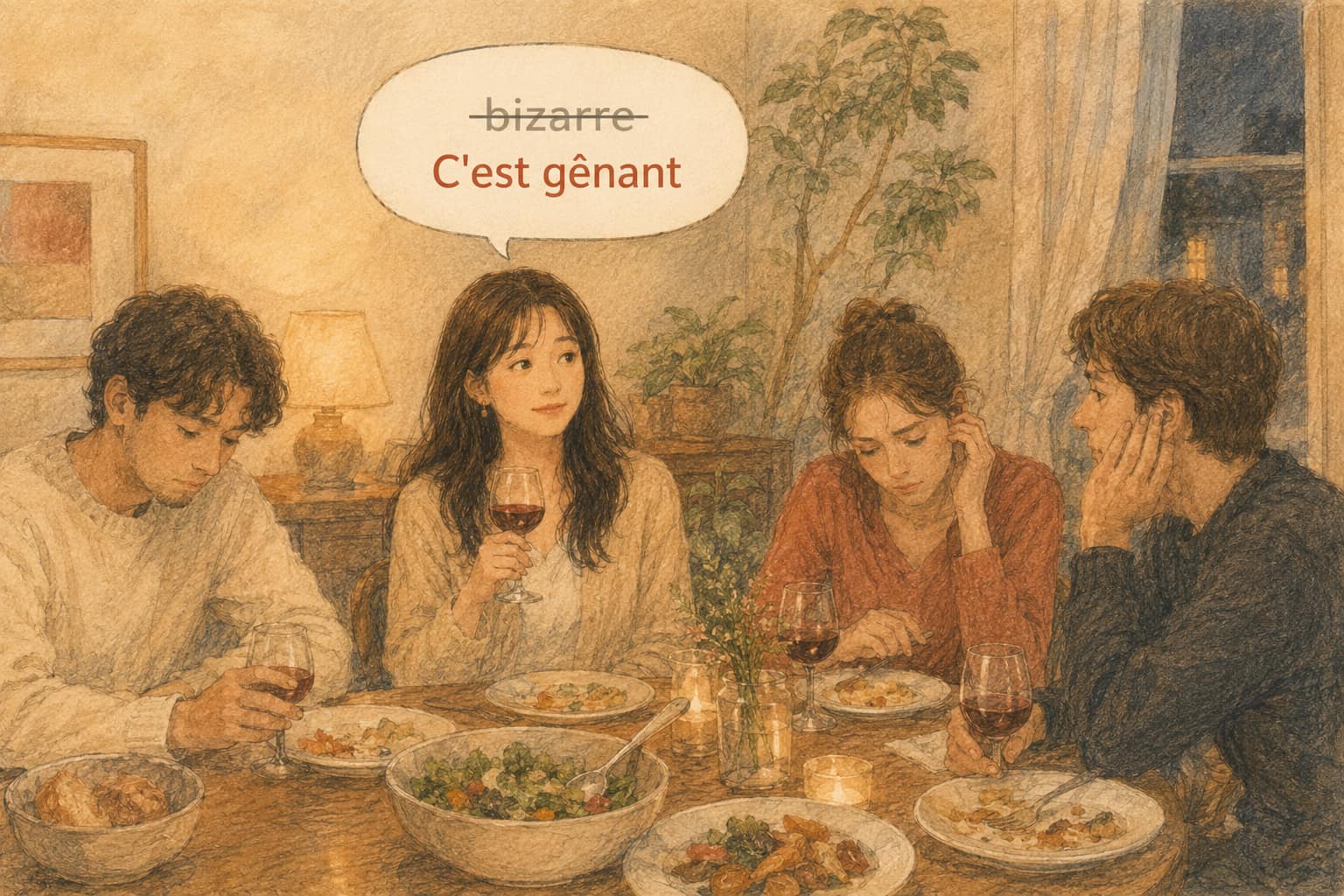
-
C’est gênant.
Said with a little sigh or a half‑smile. Used for classic cringe moments: the oversharing colleague, the joke that lands flat, the topic that clearly shouldn’t be discussed at that table.
-
Je suis mal à l’aise.
This one comes out when the discomfort is more internal. The situation might look normal from the outside, but someone feels out of place, judged, or just not okay being there.
-
Il est maladroit.
My favorite discovery. Instead of calling someone “weird”, French quietly labels them “clumsy” – socially, not just physically. It’s a surprisingly kind way to say “yeah, he’s awkward”.
Once I started copying those three, my French instantly sounded less like a literal translation and more like I actually understood what was going on.
A few real examples I noted down in my phone as they happened:
On dirait qu’il ne se rend pas compte, c’est gênant.
“He doesn’t seem to realize it, it’s awkward.”
Je suis un peu mal à l’aise avec ce sujet.
“I feel a bit awkward with that topic.”
Il est gentil, mais très maladroit.
“He’s nice, but very awkward.”
No one ever reached for awkward as an anglicism. No one tried to force a one‑to‑one translation. They just described how it felt.
These days, when I’m tempted to say bizarre, I run a tiny mental check:
- Is it cringe? → I go for gênant.
- Am I the one feeling off? → I say je suis mal à l’aise.
- Is it the person, not the situation? → I call them maladroit instead of weird.
It’s a small shift, but it’s one of those changes that makes your French sound less like “school French” and more like you’ve actually been in a few uncomfortable rooms with real people.
Tags
Now find out how you actually sound.
Simply French listens to you say each sentence and scores it word by word, so you can hear the difference you have just read about — and fix it while it is still fresh.
Takes about 10 minutes. No card needed to start.
Related Articles
French Adjectives List: 90 Describing Words and the Endings You Have to Say
A French adjectives list built for speaking, not reading. 90+ describing words plus the agreement endings you have to actually pronounce — petit vs petite, heureux vs heureuse — and a 12-pair drill.
Places in Town in French: 80 Words for Getting Around
Every place in a French town you will need to name, find or ask for — shops, services, streets and landmarks — with genders, the à + le trap, and the eight place words English speakers mispronounce.
Family Members in French: The Complete Vocabulary List
Around 80 French family words grouped by the moment you need them — plus the ten that break in your mouth (fils, femme, fille, cousin/cousine) drilled out loud and scored.