
Master Spoken French with SpongeBob: "La Fête des Enfants" Edition
Stop feeling stuck with textbook French! Learn real-world 'Français courant' using SpongeBob (Bob l'Éponge). Master 10 essential phrases with timestamps, including common slang like 'la galère,' and start speaking confidently in just 15 minutes a day with Simply French
Simply French Team
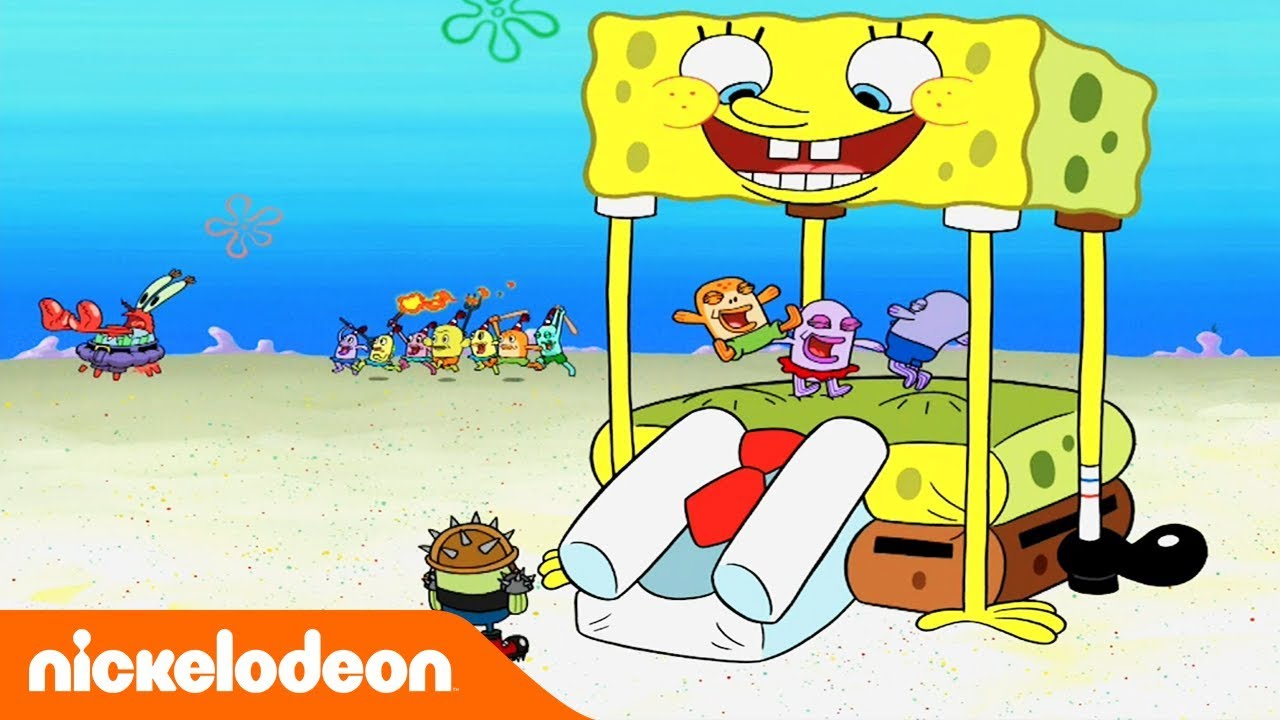
Want to speak French like a native without sounding like a dusty textbook? Sometimes the best classroom isn't a school—it's Bikini Bottom.
The French dub of SpongeBob SquarePants (Bob l’Éponge) is a goldmine for "Français courant" (everyday French). It’s packed with the slang, shortcuts, and rhythms that real people actually use. Today, we’re breaking down the episode "La Fête des Enfants" to help you level up your conversation skills.
10 Essential Lines (With Timestamps)
If you want to follow along with the audio, here are the key phrases pulled directly from the script with their exact timings:
-
[00:00:05] "J'arrive pas à croire que vous m'ayez embarqué dans cette galère."
English: I can't believe you dragged me into this mess.
-
[00:00:13] "Un excellent moyen de te faire un peu d'argent."
English: An excellent way to make yourself a little money.
-
[00:00:21] "Dis moi tu sais comment le faire taire."
English: Tell me you know how to make him quiet.
-
[00:00:23] "Qu'est ce que vous en dites ?"
English: What do you say about it? (Or "What do you think?")
-
[00:00:35] "C'est normal il joue par terre ils salissent ce sont des enfants."
English: It's normal, he plays on the floor, they get dirty, they are children.
-
[00:00:44] "Quand faut y aller faut y aller."
English: When you gotta go, you gotta go.
-
[00:00:58] "Je suis contaminé !"
English: I am contaminated!
-
[00:01:26] "Jouer à cache-cache."
English: To play hide and seek.
-
[00:02:36] "N'oublie pas d'enlever ses chaussures avant de venir jouer."
English: Don't forget to take off his shoes before coming to play.
-
[00:02:44] "On peut pas rester ici."
English: We can't stay here.
Breakdown
1. "J'arrive pas à croire que vous m'ayez embarqué dans cette galère"
English: "I can't believe you dragged me into this mess."
The Breakdown
- J'arrive pas: * This is the spoken, informal version of Je n'arrive pas.
- In conversational French, the word ne is almost always dropped.
- While arriver usually means "to arrive," the phrase arriver à means "to manage to" or "to be able to".
- À croire: * The verb croire means "to believe".
- The preposition à is required here to connect the two verbs (arriver à croire).
- Que vous m'ayez: * Que means "that."
- M' is the object pronoun "me," which jumps in front of the verb in French.
- Ayez is the subjunctive form of the verb avoir (to have). The subjunctive is triggered here because the speaker is expressing a strong emotion or disbelief ("I can't believe...").
- Embarqué: * Literally, this means "embarked" (like getting on a boat).
- In a casual context, it means to be "roped in," "dragged into," or "involved" in something against your better judgment.
- Dans cette: * Dans means "in."
- Cette is the feminine form of "this."
- Galère: * This is the most important slang word in the sentence.
- Historically, a galère was a galley ship where prisoners were forced to row.
- In modern French, it is used to describe any difficult, annoying, or messy situation (e.g., "C'est la galère !" means "It's a nightmare!").
2."Un excellent moyen de te faire un peu d'argent"
"An excellent way to make yourself a little money." Breakdown:
The Breakdown
- Un: The masculine indefinite article for "a" or "an."
- Excellent moyen:
- Excellent: A cognate that means the same in English and French.
- Moyen: Means "way," "means," or "method."
- De te faire:
- De: A preposition used here to link the noun (moyen) to the following action.
- Te: The reflexive pronoun for "yourself."
- Faire: The verb "to do" or "to make." Combined as se faire, it idiomaticlly means "to earn" or "to get for oneself."
- Un peu d'argent:
- Un peu de: The standard phrase for "a little" or "a bit of."
- Argent: Means "money" (or "silver"). Because argent starts with a vowel, the de drops its 'e' and becomes d' (elision).
3. "Dis moi tu sais comment le faire taire"
"Tell me you know how to make him quiet." Breakdown:
The Breakdown
- Dis moi:
- Dis: The imperative (command) form of the verb dire (to say/tell).
- Moi: The stressed pronoun for "me." Together, it simply means "Tell me."
- Tu sais:
- Tu: The informal version of "you."
- Sais: From the verb savoir (to know a fact or how to do something).
- Comment:
- The standard French word for "how."
- Le faire taire:
- Le: The object pronoun for "him" or "it."
- Faire: The verb "to do" or "to make."
- Taire: A verb meaning "to be silent" or "to keep quiet."
- The Construction: In French, faire + infinitive (faire taire) means "to make (someone) be quiet" or "to shut (someone) up."
4."Qu'est ce que vous en dites ?"
"What do you say about it?" (or "What do you think?")
The Breakdown
- Qu'est ce que:
- This is the standard, multi-word way to say "What" at the beginning of a question in French.
- It literally translates to "What is it that," but it functions simply as "What".
- Vous:
- The formal or plural version of "you".
- En:
- This is a pronoun that stands in for "of it," "about it," or "some".
- In this sentence, it refers to the topic or idea being discussed—asking what you say about it.
- Dites:
- This is the vous form of the verb dire (to say/to tell).
- Note: Dire is irregular; while most vous forms end in ez, this one ends in es.
5."C'est normal il joue par terre ils salissent ce sont des enfants"
"It's normal, he plays on the floor, they get dirty, they are children."
The Breakdown
- C'est normal:
- C'est: A contraction of ce (it/this) and est (is).
- Normal: A cognate that means "normal" or "to be expected."
- Il joue:
- Il: The pronoun for "he" or "it."
- Joue: From the verb jouer (to play).
- Par terre:
- This is a set phrase in French meaning "on the ground" or "on the floor."
- Ils salissent:
- Ils: The plural pronoun for "they."
- Salissent: From the verb salir (to dirty or to soil). This is an -ir verb, and salissent is the third-person plural conjugation.
- Ce sont des enfants:
- Ce sont: Use this instead of ils sont when you are identifying a group followed by a modified noun (e.g., "they are children").
- Des: The plural indefinite article (some/any).
- Enfants: Children.
6."Quand faut y aller faut y aller"
"When you gotta go, you gotta go."
The Breakdown
- Quand: * The standard French word for "when."
- Faut: * This is a very common spoken contraction of "il faut" (it is necessary / one must).
- In casual conversation, the "il" is almost always dropped, leaving just faut.
- Y aller: * Y: This pronoun means "there."
- Aller: The verb "to go."
- The Construction: Y aller is an idiom that means "to go there," "to get moving," or "to get started on a task."
- The Repetition: * The structure "Quand [action], [action]" is used in French to express that once a certain point is reached, there is no choice but to proceed.
7."Je suis contaminé !"
"I am contaminated!" Breakdown:
The Breakdown
- Je suis:
- Je: The first-person pronoun for "I."
- Suis: The first-person singular conjugation of the verb être (to be).
- Contaminé:
- This is a cognate, meaning it looks and sounds very similar to its English counterpart, "contaminated."
- It is the past participle of the verb contaminer (to contaminate).
- Note: If the speaker were female, it would be written as contaminée, though the pronunciation remains exactly the same.
8."Jouer à cache-cache"
"To play hide and seek."
The Breakdown
- Jouer à:
- Jouer: The infinitive verb "to play."
- à: In French, when you play a game, sport, or board game, you always use the preposition à (e.g., jouer au foot, jouer aux cartes).
- Cache-cache:
- Cache: From the verb cacher, which means "to hide."
- The repetition of the word creates the name of the game, literally translating to "hide-hide."
9."N'oublie pas d'enlever ses chaussures avant de venir jouer"
"Don't forget to take off his shoes before coming to play." Breakdown:
- N'oublie pas: Negative imperative of oublier.
- Enlever: The standard verb for "to take off" or "remove" clothing or accessories.
- Avant de: Followed by an infinitive (venir) to mean "before [doing something]".
The Breakdown
- N'oublie pas:
- N'... pas: The standard "sandwich" used for negation in French.
- Oublie: The imperative (command) form of the verb oublier (to forget).
- D'enlever:
- De: A preposition required after the verb oublier to connect it to the next action.
- Enlever: The standard verb for "to remove" or "to take off" (used for clothes, shoes, or lids).
- Ses chaussures:
- Ses: The plural possessive adjective for "his," "her," or "its."
- Chaussures: The French word for "shoes."
- Avant de:
- This is a set phrase meaning "before."
- In French, avant de must always be followed by an infinitive verb (the "to" form).
- Venir jouer:
- Venir: To come.
- Jouer: To play.
- Just like in English, you can stack these verbs together to mean "come to play."
10."On peut pas rester ici"
"We can't stay here." Breakdown:
- On peut pas: Another spoken contraction where the ne is dropped (On ne peut pas).
- On: Used here as the casual version of nous (we).
The Breakdown
- On: * In casual, spoken French, on is almost always used instead of nous to mean "we".
- Peut pas: * Peut: The third-person singular conjugation of the verb pouvoir (to be able to / can).
- Pas: The second half of the negative "sandwich." Just like the very first line of this script, the first half (ne) is dropped in spoken French.
- Rester: * A "false friend" for English speakers! It looks like "rest," but it actually means "to stay" or "to remain".
- Ici: * The standard French word for "here".
Deep Dive: "Cette Galère"
The star sentence of this episode occurs at 00:00:05: "J'arrive pas à croire que vous m'ayez embarqué dans cette galère". Let’s look at why this is the perfect "real world" French sentence.
The Slang: La Galère
In modern French, une galère is one of the most useful slang words you can learn. Historically, it referred to a galley ship where prisoners performed back-breaking labor. Today, it describes any annoying, difficult, or messy situation.
- Stuck in a long line? C'est la galère.
- Your car broke down? Quelle galère !
The "Invisible" Ne
In the script, the character says "J'arrive pas" instead of the formal "Je n'arrive pas". In spoken French, the ne is almost always dropped. If you include the ne in a casual conversation, you'll sound like a robot. Drop it to sound like a local!
Why Learn with Bob l'Éponge?
Cartoons are secret weapons for language learners because:
- Visual Context: Even if you don't know the word piñata, seeing the characters react to the scene makes the meaning clear.
- Repetition: SpongeBob often repeats phrases, helping the sounds stick in your long-term memory.
- Emotional Connection: You're more likely to remember a word if it's tied to a joke or a funny scene.
Level Up with Simply French
Want to turn these SpongeBob phrases into actual conversation skills? Simply French uses AI-powered pronunciation scores to give you instant feedback, just like having a tutor 24/7.
- 15 Minutes a Day: Go from "Je voudrais un... um..." to confidently chatting in just weeks.
- Zero Embarrassment: Practice your "R" and "U" sounds with our AI before you try them out on a judgmental waiter.
- Real Results: 25% better pronunciation in just one week.
Stop fumbling and start speaking. Join 987 students who are already speaking French daily.
Tags
Now find out how you actually sound.
Simply French listens to you say each sentence and scores it word by word, so you can hear the difference you have just read about — and fix it while it is still fresh.
Takes about 10 minutes. No card needed to start.
Related Articles
French Work and School Vocabulary: 100 Everyday Words
The French you need for the classroom and the office — people, subjects, supplies, exams, jobs and meetings — with genders, the false friends that change your meaning, and the eight work words English speakers mispronounce.
French Adjectives List: 90 Describing Words and the Endings You Have to Say
A French adjectives list built for speaking, not reading. 90+ describing words plus the agreement endings you have to actually pronounce — petit vs petite, heureux vs heureuse — and a 12-pair drill.
Places in Town in French: 80 Words for Getting Around
Every place in a French town you will need to name, find or ask for — shops, services, streets and landmarks — with genders, the à + le trap, and the eight place words English speakers mispronounce.